Dental Crowns vs. Bridges: Which Restoration Is Right for Your Smile?
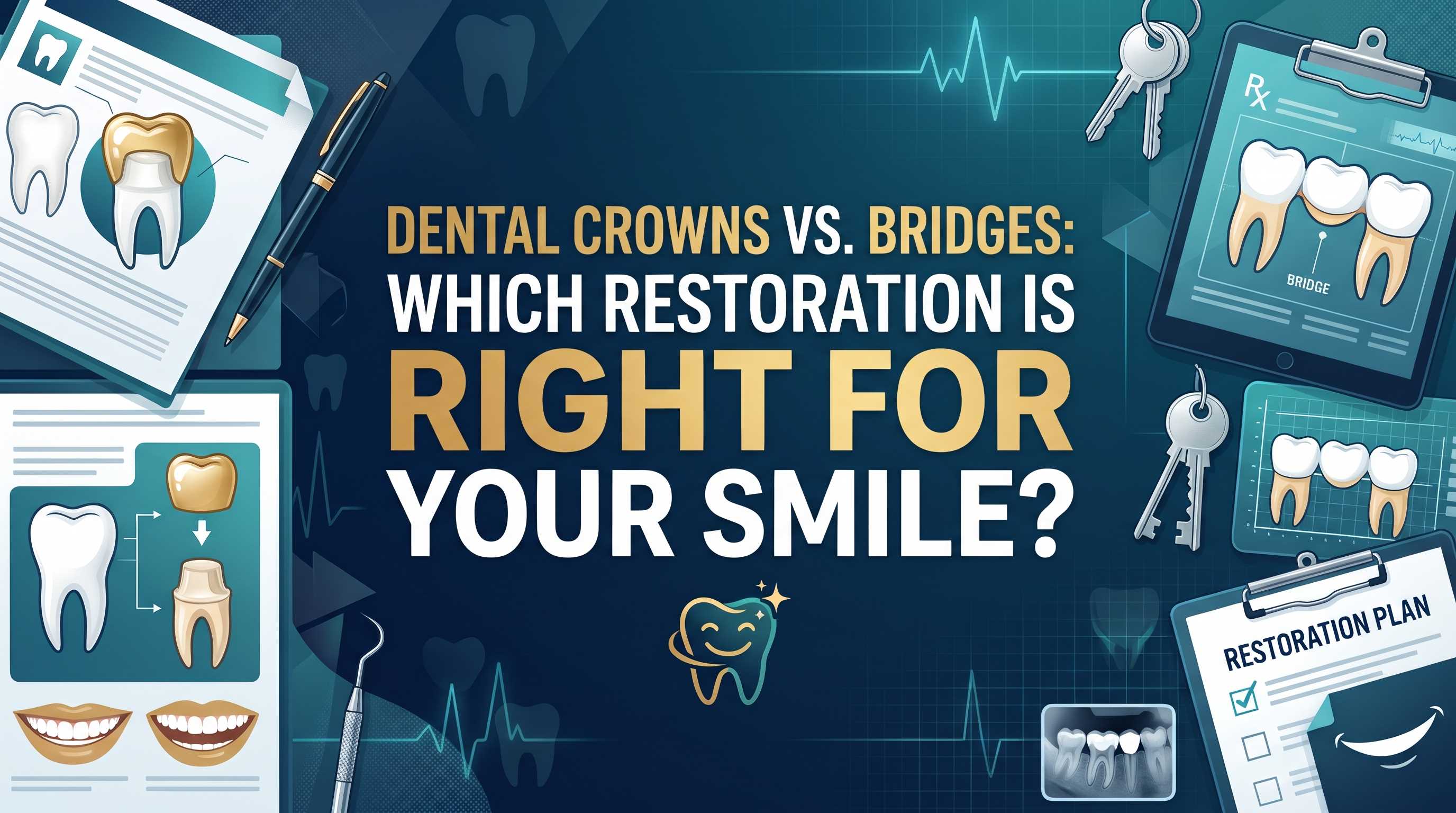
When dealing with a tooth that is damaged, severely decayed, or missing entirely, choosing the right dental restoration is essential for restoring your bite, speech, and smile confidence. At The Tooth Fairy Dentistry in Oakville, Dr. Pooja Kaka helps patients evaluate the unique biomechanical advantages of dental crowns and fixed dental bridges to select the ideal option for their long-term health.
Comparing Crowns and Bridges
While both options restore function and appearance, they serve distinct clinical roles:
-
Dental Crowns (Caps): A single crown is designed to encase and protect an individual natural tooth that has suffered extensive decay, cracking, or previous root canal treatment. As long as the underlying tooth root is healthy and anchored firmly in the bone, a crown restores complete shape, strength, and chewing function without affecting neighboring teeth.
-
Fixed Dental Bridges: A bridge is used to replace one or more missing teeth in a row. It consists of an artificial replacement tooth (called a pontic) suspended between two custom crowns that are anchored securely onto the natural teeth on either side of the empty space.
Preparation and Enamel Reshaping
The preparation process differs significantly between the two treatments:
-
Crown Preparation: Placing a crown only requires reshaping the single damaged tooth that needs protection. This preserves all adjacent healthy teeth in their natural state.
-
Bridge Preparation: Placing a fixed bridge requires trimming down and reshaping the adjacent natural teeth (the abutments) so they can hold the supporting crowns. This means removing healthy enamel from neighboring teeth to support the missing tooth gap.
Jawbone Stimulation Differences
Understanding how restorations interact with your jawbone is crucial for long-term health:
-
Natural Root Stimulation (Crowns): A tooth restored with a single crown retains its natural tooth root. When you chew, normal pressure is transmitted through the root into the jawbone, stimulating ongoing bone density and preserving healthy facial structure.
-
Bone Loss in Missing Spaces (Bridges): Because a bridge pontic sits over the gum line without a root underneath, the underlying jawbone in the missing tooth gap receives no direct chewing stimulation. Over time, this lack of stimulation can cause gradual bone loss (disuse shrinkage) beneath the bridge.
Aesthetic and Functional Material Selection
We utilize state-of-the-art, biocompatible, metal-free materials tailored to your specific bite needs:
-
Monolithic Zirconia: Known for exceptional toughness and fracture resistance, zirconia is the ideal choice for back chewing molars that handle heavy biting forces.
-
Lithium Disilicate (e.max): Renowned for superior optical translucency, e.max mimics natural tooth enamel beautifully, making it the gold standard for front teeth restorations.
Restoration Lifespan Expectations
With proper daily oral hygiene and routine checkups, both options provide outstanding durability:
-
Single Crowns: Well-maintained monolithic single crowns exhibit exceptional clinical longevity, with 5-year survival rates ranging between 96% and 98%. They typically last 10 to 15+ years.
-
Fixed Bridges: Multi-unit bridges typically last 5 to 10+ years. Because anchor teeth bear the chewing workload for the missing tooth, bridges experience higher mechanical stress over time.
The Step-by-Step Procedure
Getting a crown or bridge at our Oakville office is a smooth, comfortable process:
-
Consultation & Digital Scan: We evaluate your bite and take comfortable, mess-free 3D digital scans instead of gag-inducing putty trays.
-
Gentle Tooth Preparation: Under deep local numbing, we gently reshape the tooth structure and place a comfortable temporary restoration to protect your smile.
-
Custom Crafting: Your restoration is custom-milled in a dental laboratory to match the precise color, shape, and translucency of your natural teeth.
-
Final Fitting & Bonding: We verify the fit, shade, and bite alignment before permanently bonding your new restoration into place.